


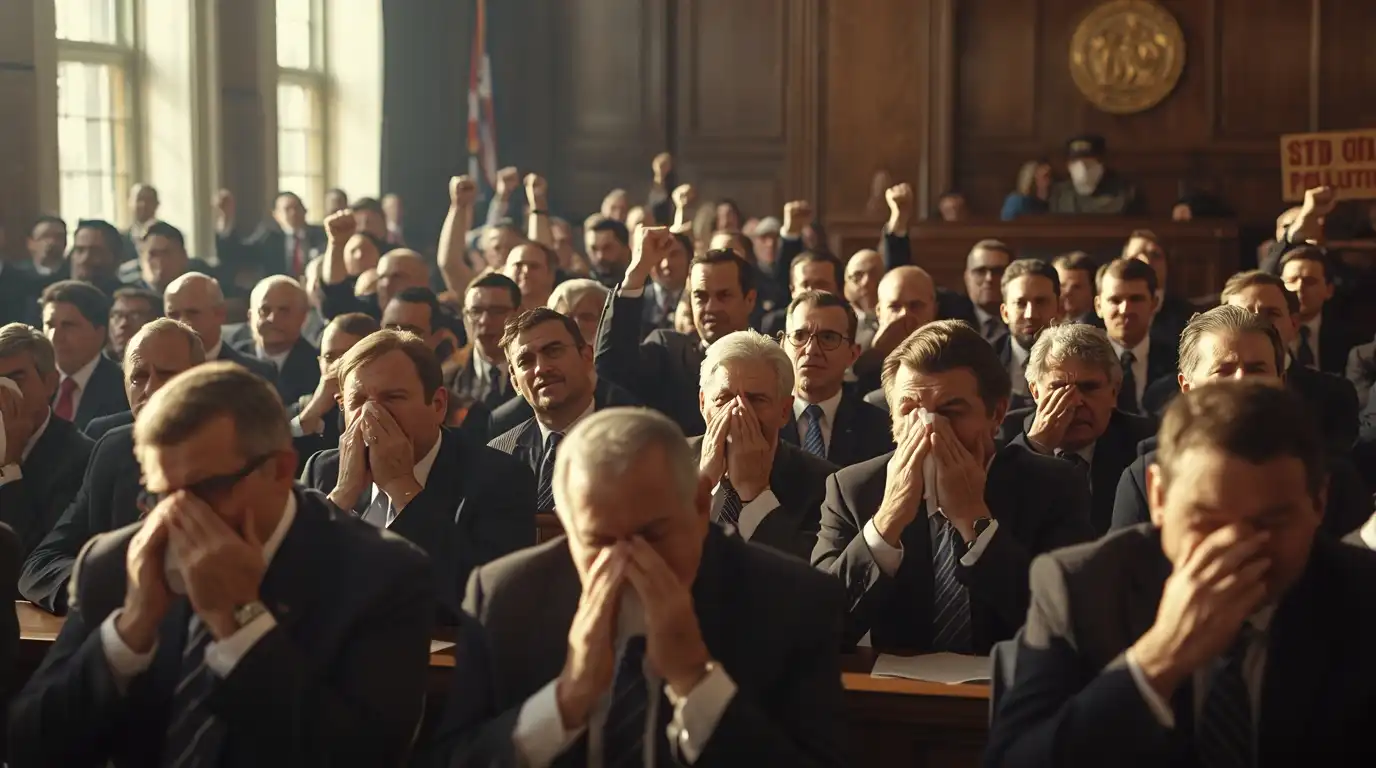
In a bold new frontier for corporate victimhood, a coalition of fossil fuel giants, plastic manufacturers, and a few surprisingly sensitive hedge funds have filed a class action lawsuit against climate activists, claiming “emotional distress caused by unrelenting guilt trips.”
The lawsuit, filed in the U.S. District Court for Corporate Feelings, accuses environmental groups of “weaponizing morality” and “creating an unsafe space for profit.” The plaintiffs include major players such as PetroGlobal, MegaPlast Industries, and CoalCo Ltd.—companies that say they’ve “had enough of being made to feel like the bad guys just for cooking the planet slightly.”
“We’ve been called ‘greedy,’ ‘irresponsible,’ even ‘a threat to future generations,’” sobbed PetroGlobal CEO Rick Tarmack during a press conference. “Do you know how hurtful it is to hear that while refueling your private jet to fly to a climate summit?”
The lawsuit seeks damages for emotional trauma, reduced yacht enjoyment, and the rising cost of PR campaigns designed to make oil look “cuddly and approachable.”
Environmental organizations have responded with disbelief. Greta Thunberg’s legal team reportedly laughed so hard they had to be hydrated with reusable bottles. “It’s a fascinating legal precedent,” said activist lawyer Dr. Leona Earthchild. “Apparently, corporations can now sue you for making them aware of consequences.”
The plaintiffs claim activists use “tactics of emotional manipulation” such as holding signs, staging sit-ins, and looking disappointed at press conferences. One executive from MegaPlast testified that after seeing a protestor dressed as a dying sea turtle, he experienced “a week-long inability to enjoy sushi.”
Psychologists hired by the corporations have diagnosed the CEOs with a new condition: Eco-Triggered Conscience Disorder (ETCD)– characterized by anxiety, sweating during documentaries, and compulsively buying carbon offsets after reading bad press.
Meanwhile, lawmakers sympathetic to the corporate cause have introduced a bill titled the “Don’t Hurt Big Oil’s Feelings Act.” The legislation would make it illegal to use words such as “pollution,” “melting,” or “planet” within 100 meters of an energy executive.
“This is about balance,” said Senator Clay Derrick (R–ExxonMobil). “Yes, the Earth might be warming, but so are the hearts of investors, and that should count for something.”
Critics have called the lawsuit “the most fragile moment in capitalism since billionaires demanded participation trophies.” Some legal experts warn that if successful, the case could inspire a wave of similar suits, fast-fashion brands suing for sadness, airlines suing over turbulence of conscience, and tech companies suing users for deleting apps “too harshly.”
Still, the corporations remain defiant. “We just want to exist without being constantly reminded of the consequences,” said Tarmack, clutching a tissue made from recycled shareholder reports. “Is that so much to ask?”
In a statement, climate activists vowed to continue their protests “until the companies either grow a conscience or drown in it.”
As one activist spray-painting “EARTH DESERVES BETTER” onto a billboard put it: “If they can sue us for guilt, maybe we’ll countersue for planetary homicide.”