


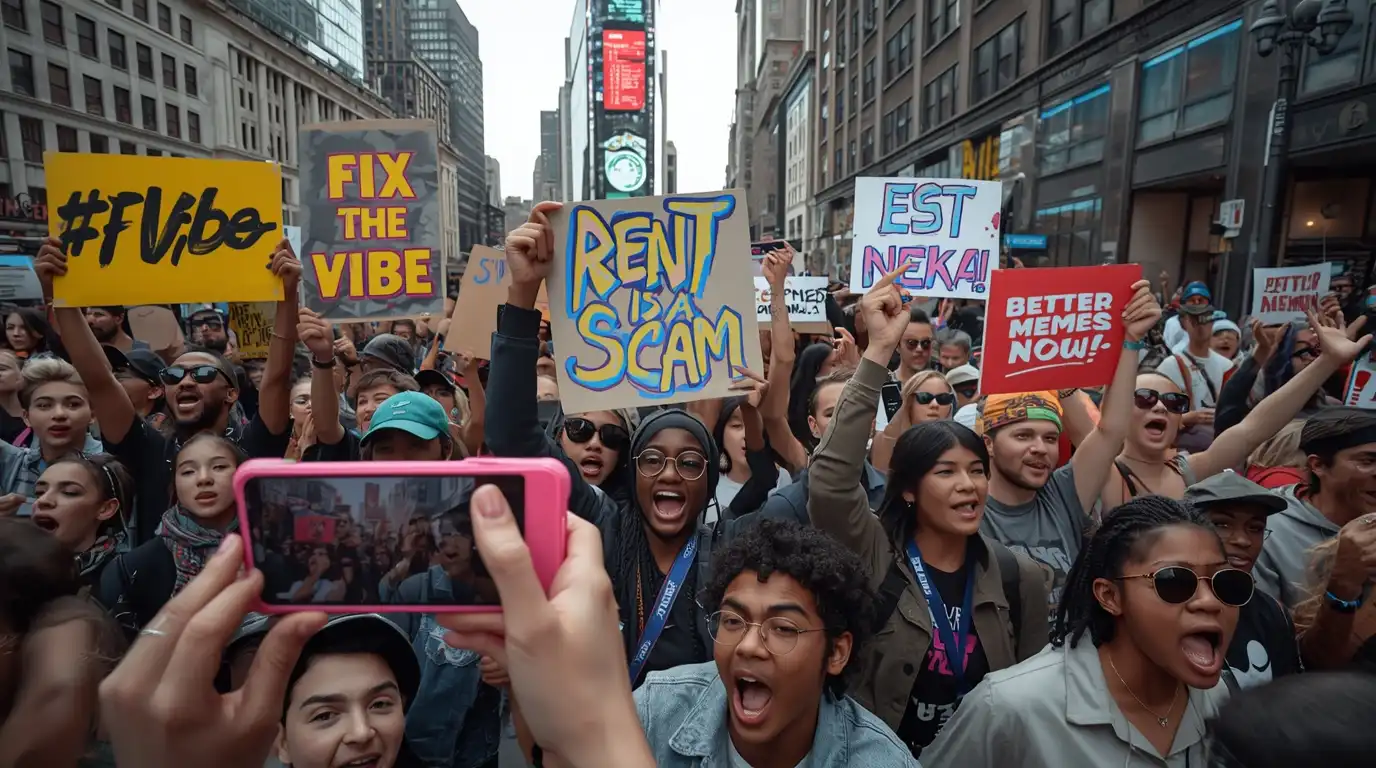
In an unprecedented move that economists, diplomats, and social media managers are calling “a global vibe crisis,” Generation Z has officially issued a strike notice to the entire planet, demanding “better memes, less inflation, and maybe just one week without existential dread.”
The notice, posted simultaneously on Instagram Stories, TikTok comments, and a Google Doc nobody bothered to format, was signed by over 400 million youths aged 18 to 29. It lists twelve “non-negotiables,” including affordable rent, functioning climate policy, mental health days “that actually heal,” and “a universal meme quality standard to end the ongoing crisis of low-effort content.”
“We’ve tried everything: irony, nihilism, astrology. Nothing’s working anymore,” said Gen Z spokesperson and part-time content creator, @AnxietyAndAvocados, at a live-streamed press conference conducted entirely through a series of reaction GIFs. “If the world doesn’t meet our demands, we’ll go fully offline. No posts, no stories, no dances. Let’s see how the algorithm survives without us.”
The United Nations convened an emergency session in response, with member states scrambling to interpret the strike notice. France proposed offering “free therapy and croissants,” while the U.S. suggested “a round of stimulus checks and a national repost of a relatable meme.” China declined to comment but quietly launched a new app, “GenZen,” promising calm productivity and filtered doomscrolling.
Financial markets reacted instantly. The Dow plunged 800 points as analysts realized that without Gen Z, no one would be left to create ironic crypto memes or run the world’s TikTok marketing campaigns. Elon Musk tweeted, “They can’t strike if they never worked,” before being ratioed into silence by a single reply: “OK boomer.”
Sociologists are calling this the “first digitally native labor movement.” Unlike traditional strikes, which target employers, the Gen Z protest is aimed at “everyone older than 30, the economy, the weather, and the general vibe of existence.”
“It’s a full-spectrum burnout,” explained Dr. Luna Vasquez, a youth culture expert at the University of Sydney. “They’re tired of grinding for jobs that pay in exposure, paying $9 for iced coffee, and seeing the same meme template recycled since 2018. Honestly, they deserve hazard pay.”
Older generations, however, remain unimpressed. Baby Boomers dismissed the protest as “attention-seeking,” while Millennials quietly supported it, hoping Gen Z might also demand the return of affordable housing and normal job security.
World leaders are reportedly preparing concessions. The European Union has proposed capping rent increases at “no more than 20% per meme shared,” while Canada is considering replacing national anthems with lo-fi beats. Meanwhile, Australia has promised to “just chill, mate.”
Negotiations continue, but insiders say Gen Z may be willing to compromise if global institutions can deliver “one month of good vibes, one universal meme that actually lands, and an economy that doesn’t make us cry.”
Until then, the planet faces a terrifying new reality: no relatable TikToks, no chaotic Twitter threads, and no serotonin-fueled doomscroll breaks.
As one anonymous Gen Z protester put it:
“Fix the world, or we’re going back to Tumblr. And this time, we mean it.”