


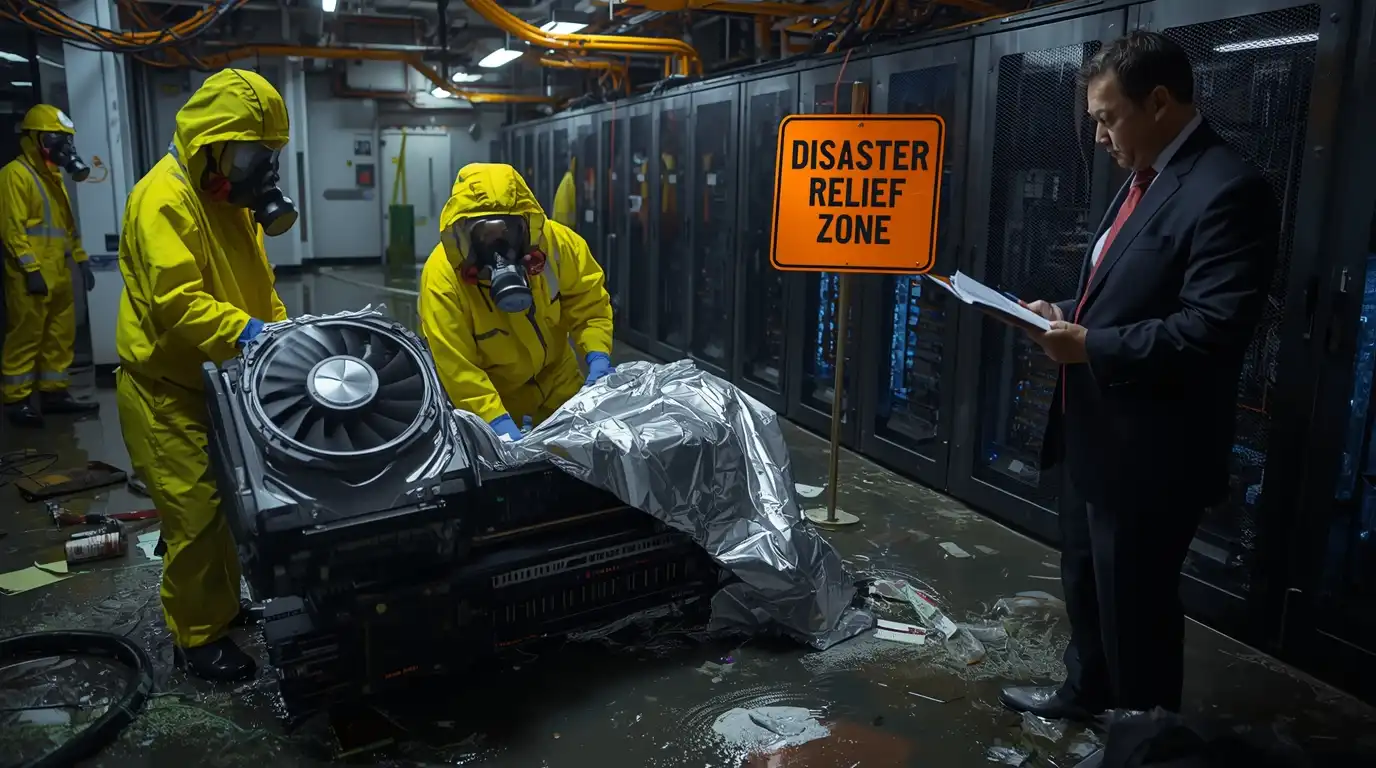
In an unprecedented move that environmentalists are calling “the digital version of giving a forest an asthma inhaler,” several world governments have officially declared datacentres a new category of natural disaster.
The decision follows reports that global energy demand from AI training models has outpaced the combined consumption of small nations, including Iceland, Uruguay, and “probably Mordor,” according to the International Energy Agency.
Under the new classification, datacentres will now qualify for disaster relief funding, allowing tech companies to apply for government aid to rebuild overheated GPU clusters, hydrate their parched cooling towers, and comfort emotionally exhausted interns.
“We’re not just facing an environmental crisis,” explained U.S. Energy Secretary Marla Finestone at a press conference surrounded by humming servers. “We’re facing a humanitarian one — if you count corporate shareholders as people, which we do.”
The move follows weeks of blackouts in major urban centers after AI models began demanding “a little more juice” to process selfies faster and write limericks about cryptocurrency.
Power grids in California and London reportedly buckled last week when a cluster of ChatGPT instances began simultaneously trying to explain the meaning of love — an event scientists now refer to as “The GPU Event Horizon.”
Meanwhile, Silicon Valley executives have already applied for emergency recovery funds, citing “severe data trauma” and “emotional losses in market capitalization.” Microsoft has filed a claim for “psychological hardship,” while Google requested fuel vouchers “to keep the cloud operational during the healing process.”
“We didn’t choose this life,” said a tearful tech spokesperson wearing a Patagonia vest. “Our servers were innocent. They didn’t ask to hallucinate. They just wanted to generate content responsibly.”
Environmentalists have called the move “spectacularly deranged,” pointing out that the same corporations receiving aid were responsible for draining local water tables to cool their facilities. “It’s like setting your kitchen on fire and then billing the fire department for trauma therapy,” said Dr. Leena Cates from the Green Future Alliance.
In Australia, Prime Minister Anthony Albanese announced the Datacentre Disaster Assistance Scheme (DDAS), pledging $3 billion to “support struggling megacorps affected by rising electricity prices.” When asked about the environmental impact, Albanese reassured citizens that the funding would be “carbon-neutral by 2089 — or whenever the next government takes over.”
Elsewhere, the United Nations is reportedly considering the creation of a new global relief day called World Server Awareness Week, where citizens will be encouraged to “think quietly to conserve data.” Schools will distribute pamphlets reminding children to “close unused browser tabs to prevent famine in the cloud.”
Economists estimate that by 2030, 40% of global GDP will be spent keeping AI models hydrated, ventilated, and emotionally validated. Critics warn that if left unchecked, future generations may need to choose between running ChatGPT-12 or maintaining breathable air.
“This is nature’s new hurricane,” said Finestone. “Except instead of wind and rain, it’s hubris and heat maps.”